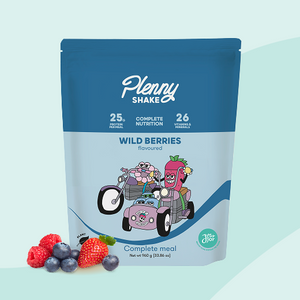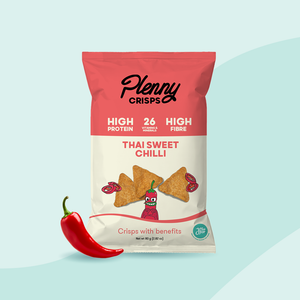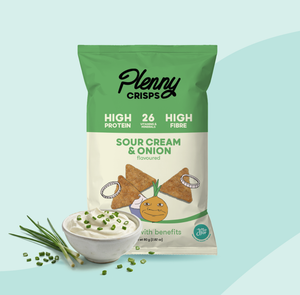


 Only The Stuff That Does Stuff
 Everything You Need In One Meal
 Stay Full For 3-5 Hours



Our Omega-3 supplement is designed to support your heart, brain and eyes health with two essential fatty acids – Eicosapentaenoic Acid (EPA) and Docosahexaenoic Acid (DHA) – from microalgae, the original marine source. It is plant-based, sustainable, and avoids reliance on fish.
Take two capsules a day with your drink of choice to get an adequate amount of omega-3, and you’re set!
Pro tip: Experiencing burps or gas after taking the capsules? Take your capsules preferably with a meal (ideally one that contains some fat) to support absorption and reduce the chance of fishy burps. If needed, split the dose across two meals, and the problem’s solved!
Nutritional breakdown
|
Active compound |
Per daily serving (2 capsules) |
|
Eicosapentaenoic acid (EPA) |
200 mg |
|
Docosahexaenoic acid (DHA) |
500 mg |
Why you should care about omega-3
These polyunsaturated fatty acids (PUFA) are particularly beneficial. Despite its name, fatty acids aren't exactly fats themselves. Instead, they are the basic building blocks of fats and play a key role in determining the health effects of consuming fats.
Fatty acids are generally divided into two main categories: saturated and unsaturated fatty acids.
Saturated fatty acids (SFAs) have been strongly linked to an increased risk of cardiovascular disease. On the other hand, unsaturated fatty acids (UFAs) (except for trans-unsaturated fatty acids (TFAs)) have shown properties that protect the heart [1].
UFAs that have a double bond at the third carbon, like EPA and DHA, offer significant benefits of this kind.
EPA and DHA are among the most researched omega-3s, and here’s what they can do:
Eicosapentaenoic acid (EPA)
EPA has been connected to several health improvements, including lowering inflammation, reducing blood pressure and "bad" cholesterol, decreasing the formation of blood clots, and slowing the progression of atherosclerosis (hardening of the arteries). Its benefits extend beyond cardiovascular health, helping individuals with diabetes and obesity by reducing inflammation and improving their blood test results. It has even been associated with a lower risk of developing breast, colon, and prostate cancers, as well as aggressive cancers like pancreatic carcinoma [2].
Docosahexaenoic acid (DHA)
DHA has an array of benefits comparable to EPA. The specific benefits of DHA include maintaining heart function by lowering blood triglycerides (i.e. fat), increasing “good” cholesterol, and decreasing resting heart rate, thereby reducing the risk of fatal coronary heart disease. What makes DHA particularly unique is its cognitive benefits [3]. It has been observed that this PUFA is important for brain function, and studies have observed that its supplementation may boost cognitive performance, improving memory and learning ability, and reducing the risk of Alzheimer’s disease, particularly in elderly populations [3][4][5][6]. DHA has also been observed to prevent and slow the progression of diseases that impact eyesight [7][8].
But these are not the only ones. There is another omega-3, as important as the previous:
Alpha-linolenic acid (ALA)
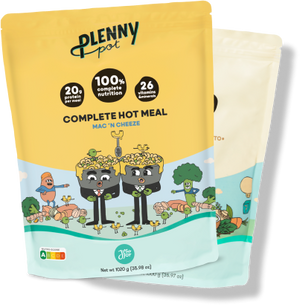
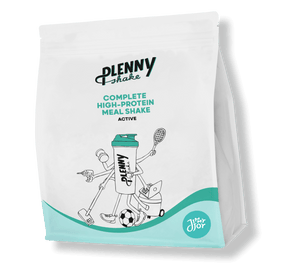
ALA is another omega-3 PUFA, and like EPA and DHA, it has cardioprotective benefits. ALA helps protect the heart by reducing blood clots, reducing inflammation, keeping blood vessels healthy and flexible, and preventing abnormal heart rhythms [11]. Additionally, you can enjoy the benefits of EPA and, to a small extent, DHA from its consumption, because the body can produce these fatty acids from ALA [12]! Its incorporation into a healthy diet is crucial, since the body cannot produce ALA naturally. Sources of ALA include: flaxseed, chia, garden cress, walnuts, and green leafy vegetables [13][14][15], Plenny Shakes, Plenny Bars, Plenny Pots, Plenny Drinks – you get the idea!
If Plenny meals already have omega-3 (as ALA), why do I need to take a supplement?
Great question. Our Plenny meals do contain omega-3 - specifically ALA, the plant-based version you’ll find in things like flaxseed and chia.
But ALA is only one part of the omega-3 family. Your body can turn some ALA into EPA and DHA - the types most directly linked to brain, eye, and cardiovascular benefits - but it’s not the most efficient process. That’s where our supplement comes in: it tops up your ALA intake with ready-to-use EPA and DHA from algae, so you’re covered from every angle.
We’ve experimented with increasing the omega-3 content, even EPA and DHA directly into Plenny meals, but let’s just say… the taste did not pass the vibe check. So instead, we created a separate supplement.
Plenny meals still give you at least 0.6 g of omega-3 (ALA) per serving. The supplement completes the picture by adding pre-formed EPA and DHA - so your body doesn’t have to struggle with the conversion.
Will this help me get a healthier balance between omega-3 and omega-6?
The imbalance in modern diets isn’t caused by consuming too much omega-6 (which is essential), but rather by not getting enough omega-3. This is largely the result of poor food processing practices and outdated nutrition advice [16]. In short, the main concern is omega-3 deficiency, not omega-6 excess.
You must have heard of the omega 6:3 ratio, which is quite debated. While this ratio can show the balance between the two, it’s not a reliable measure of how much omega 3 you’re actually getting. For example, a food can provide a perfectly adequate amount of omega-3 but still look “deficient” if the omega-6 content happens to be higher.
At Jimmy Joy, our priority is to make sure you get everything you need for a balanced diet. That is why we developed our Omega-3 supplement, to guarantee you’re getting sufficient amounts of EPA and DHA every day.
Why algae oil > fish oil?
A unique feature of our omega-3 supplement is that the nutrients are sourced from microalgae rather than fish. Algal oil offers several advantages over fish oil, including improved taste properties, sustainability, and suitability for vegan diets [9]. It is produced under controlled conditions, lowering the risk of marine contaminants. Life cycle assessment studies demonstrate that commercial algae omega-3 DHA products manufactured using sustainable practices can provide 30-40% lower climate change impact compared to fish oil [10].
Wrapping it up
Our new omega-3 supplement, high in EPA and DHA, supports your overall health.
- Heart*: supports blood circulation and helps manage cholesterol and fats in your blood
- Anti-inflammatory*: calms inflammation, slows atherosclerosis, and supports healthier outcomes in diabetes and obesity
- Brain and mind*: essential for memory, focus, learning, and cognitive performance; lowers risk of Alzheimer’s and age-related decline
- Eyes*: protects vision as you age
- Cancer protection: linked to reduced risk of breast, colon, prostate and pancreatic cancers
- Planet: sourced from algae (fish-free!) → vegan-friendly, and free from marine contaminants
- Better balance: helps you increase your omega-3 daily intake, commonly low in Western diets
*EPA and DHA contribute to the normal function of the heart (beneficial effect with 250 mg/day EPA+DHA). DHA contributes to the maintenance of normal brain function and normal vision (beneficial effect with 250 mg/day DHA)
Food science and nutrition are constantly advancing, and we continue to monitor with great care to deliver the healthiest meal possible. Check out our sources below if you’re curious and want to dive in yourself.
Sources
- Kh JK, Kh SK, Afshari A, Rezayi M, Ghayour-Mobarhan M. Dietary fatty acids-effects on cardiovascular disease. Mini-Reviews in Medicinal Chemistry. 2019 Sep 20;19.
- Nassar M, Jaffery A, Ibrahim B, Baraka B, Hazem Abosheaishaa. The multidimensional benefits of eicosapentaenoic acid: from heart health to inflammatory control. The Egyptian Journal of Internal Medicine. 2023 Dec 12;35(1).
- Yurko-Mauro K. Cognitive and Cardiovascular Benefits of Docosahexaenoic Acid in Aging and Cognitive Decline. Current Alzheimer Research. 2010 May 1;7(3):190–6.
- Johnson EJ, Mcdonald K, Caldarella SM, Chung H, Troen AM, Snodderly DM. Cognitive findings of an exploratory trial of docosahexaenoic acid and lutein supplementation in older women. Nutritional Neuroscience. 2008 Apr;11(2):75–83.
- Yurko-Mauro K, McCarthy D, Rom D, Nelson EB, Ryan AS, Blackwell A, et al. Beneficial effects of docosahexaenoic acid on cognition in age-related cognitive decline. Alzheimer’s & Dementia. 2010 Nov;6(6):456–64.
- Daiello LA, Wellenius G, Ott BR, Buka SL. Role of supplemental docosahexaenoic acid (DHA) for cognition in Alzheimer’s disease and mild cognitive impairment: A systematic review and meta-analysis of randomized controlled trials. Alzheimer’s & Dementia. 2015 Jul;11(7):P611.
- Hoffman DR, Hughbanks-Wheaton DK, Spencer R, Fish GE, Pearson N, Wang Y, et al. Docosahexaenoic Acid Slows Visual Field Progression in X-Linked Retinitis Pigmentosa: Ancillary Outcomes of the DHAX Trial. Investigative Ophthalmology & Visual Science. 2015 Oct 15;56(11):6646–6.
- García-Layana A, Recalde S, Alamán A, Robredo P. Effects of Lutein and Docosahexaenoic Acid Supplementation on Macular Pigment Optical Density in a Randomized Controlled Trial. Nutrients. 2013 Feb 15;5(2):543–51.
- Winwood RJ. Algal oil as a source of omega-3 fatty acids. Woodhead Publishing; 2014. p. 389–404. Available from: https://www.sciencedirect.com/science/article/abs/pii/B978085709428550014X
- Davis D, Morão A, Johnson JK, Shen L. Life cycle assessment of heterotrophic algae omega-3. Algal Research. 2021 Dec;60:102494.
- Mozaffarian D. Does alpha-linolenic acid intake reduce the risk of coronary heart disease? A review of the evidence. Alternative therapies in health and medicine [Internet]. 2016 [cited 2025 Aug 29];11(3). Available from: https://pubmed.ncbi.nlm.nih.gov/15945135
- Goyens PLL, Spilker ME, Zock PL, Katan MB, Mensink RP. Compartmental modeling to quantify α-linolenic acid conversion after longer term intake of multiple tracer boluses. Journal of Lipid Research. 2005 Jul;46(7):1474–83.
- Austria JA, Richard MN, Chahine MN, Edel AL, Malcolmson LJ, Dupasquier CMC, et al. Bioavailability of alpha-linolenic acid in subjects after ingestion of three different forms of flaxseed. Journal of the American College of Nutrition [Internet]. 2008 Apr 1;27(2):214–21. Available from: https://pubmed.ncbi.nlm.nih.gov/18689552/
- Saini RK, Prasad P, Sreedhar RV, Akhilender Naidu K, Shang X, Keum YS. Omega−3 Polyunsaturated Fatty Acids (PUFAs): Emerging Plant and Microbial Sources, Oxidative Stability, Bioavailability, and Health Benefits—A Review. Antioxidants. 2021 Oct 15;10(10):1627.
- Simopoulos AP. Omega-3 fatty acids in wild plants, nuts and seeds. Asia Pacific Journal of Clinical Nutrition. 2002 Oct;11(s6):S163–73.
- Allport S. The missing nutrient: Omega-3s and the Western diet. Appetite. 2006 Nov;47(3):385.


 Product added to cart